Bailey Acacia Tree – How To Grow And Care For A Bailey Acacia Tree
Compact and svelte, the bailey acacia tree brightens up whatever corner in your garden with its evergreen awning and colorful flowers. Their elegance and vigorous shades are more prominent in Mediterranean landscapes and wall-sided gardens. Their pocket-sized stature doesn't take abroad from their charm either. Whether you look at them as shrubs or trees in their own rights, in that location's no denying that the bailey acacia tree is the ideal backdrop for more flashy and showy flowering perennials.
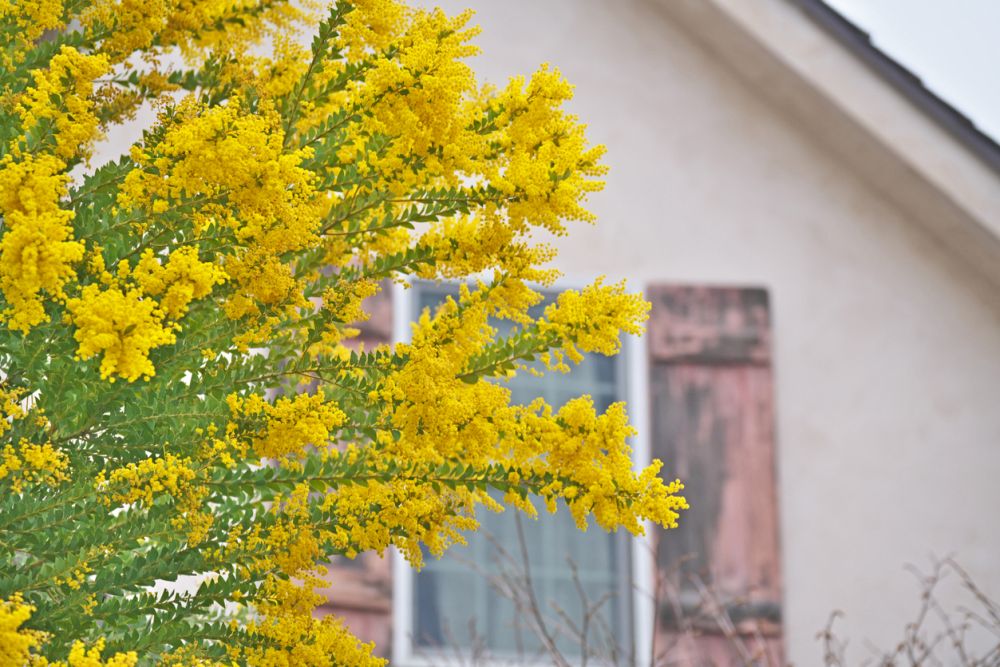
The dazzler of trees is that they are easy to grow, have a high tolerance to the weather around them in one case they're established, and they become a permanent fixture of the landscape. And the bailey acacia tree is no dissimilar. Read on to find out more about these bang-up candidates for many settings or garden designs you're currently because.
All About the Bailey Acacia Tree
A native of New South Wales, Australia, the bailey acacia tree (Acacia baileyana) casts a formidable shadow for a tree of its size. That mainly has to do with its erect posture and round canopy, which provide shade all year circular. The compact bailey acacia tree goes by many names, including Cootamundra wattle and golden mimosa tree, amongst others.
As a member of the Fabaceae family unit, the bailey acacia has a more small awning that hangs and spreads low to the basis. Information technology averages 20 feet high at full maturity and spreads about 40 feet across. Just since the tree stands straight, it looks a lot taller and more svelte compared to other large trees.
All-time suited for USDA zones x and eleven, the tree is as well known for its longevity and can live for more than 50 years. Add to that its fast growth rate, and you know you've got yourself a winner. In the correct weather, the tree grows about 36 inches a year. Within a few years, you'll accept a well-established tree that spreads its cheer and shade on every corner in your garden or backyard.
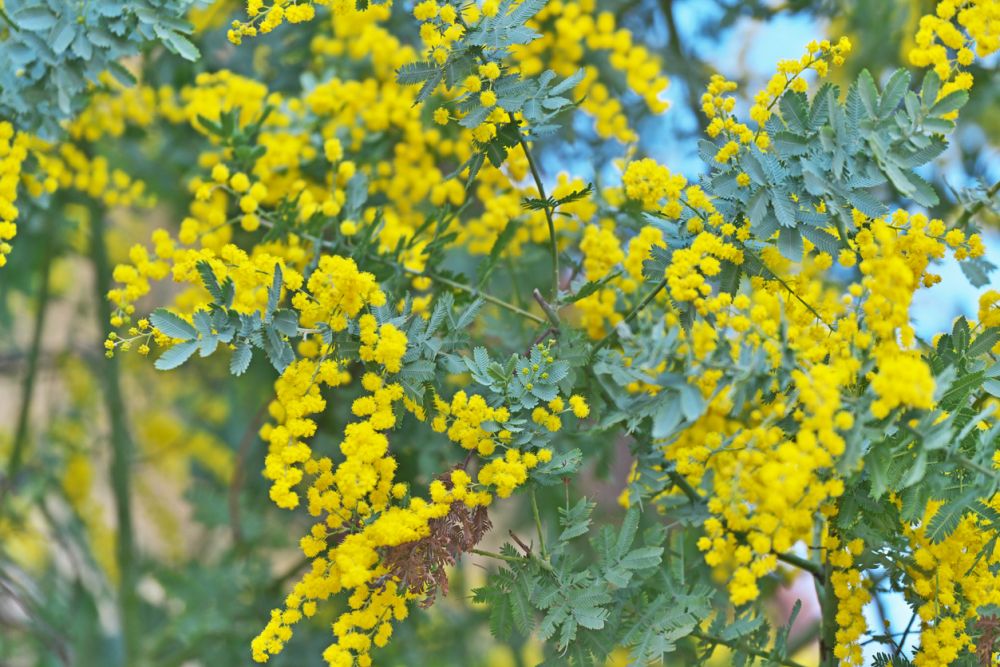
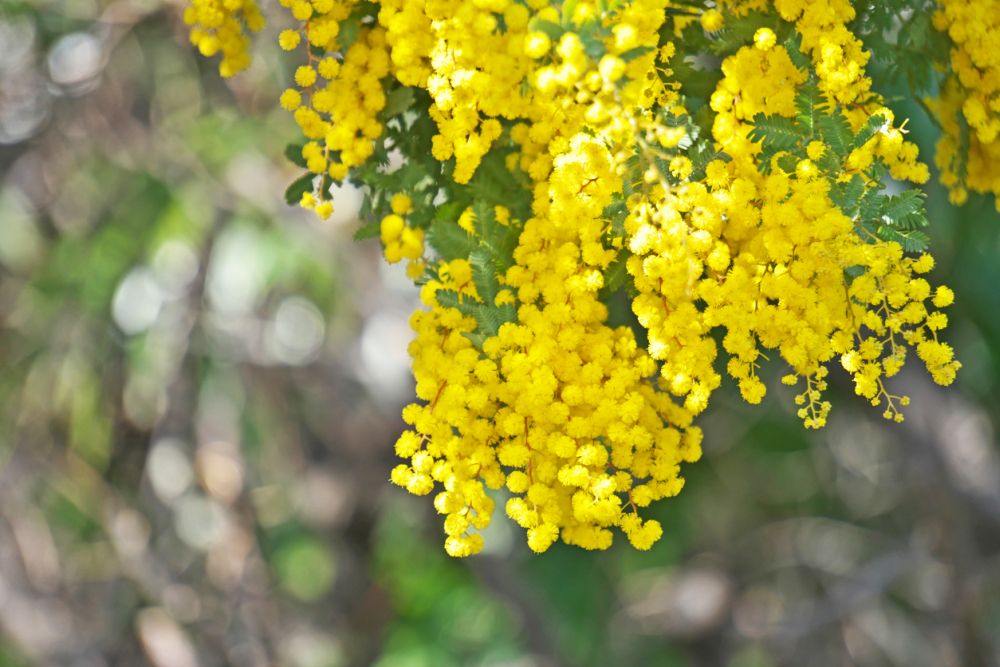
The bark of the tree tin be either grayness or lite dark-brown. The young tree volition have smoothen bawl, which tends to develop grooves and furrows as it ages. But it's the yellow flowers that give this tree its outstanding ornamental values. The flowers have both male and female parts and grow in clusters along thin stems. That eliminates the need for pollinators since each bloom self pollinates with the help of the wind.
The flowers are bright and fragrant. Later on pollination, they fade and brand room for the small fruits to develop. The fruits are brown when ripe and boilerplate about 3 inches long.
Uses of the Bailey Acacia Tree
For a tree that was an indispensable role of the culture of the aboriginal Australians, the bailey acacia tree has many uses than your average tree. Not just the obvious benefits as a source of timber, simply it has been an integral part of many industries also. Here are the main uses of the bailey acacia tree.
- Wood Products: The wood of the acacia goes into many wood-related industries, including sawn timber and furniture. It has solid wood, which goes well into making veneers for furniture. The tree is too a good source of lurid, fuelwood, charcoal, tool handles, posts, musical instruments, and turnery.
- Bark Products: The bark of the tree is of no less value than its solid and multi-purpose wood. Tannin is extracted from the bark, which provides all of Australia's supply of the precious material used for processing and curing leather. The bark as well provides a skilful quality glue that goes into bonding wood structures. Recent research as well pointed to an anticorrosive agent that could be extracted from the bark.
- Gum: The gum that the tree provides goes into many food industries. Information technology serves both equally a food additive and an emulsifier.
- Essential Oil: In Australia, the fragrant wattle oil is a highly sought-subsequently essential oil that is used in spas. It besides goes into manufacturing scented candles.
- Traditional Medicine: Ancient Australians accept used the bark and resins of the acacia tree in their traditional medicines. These concoctions are reputed to cure everything from asthma to cancer. They as well used the fruits of the tree for food.
How to Grow Bailey Acacia Tree
Copse known for their longevity are usually hard to start from seeds. The seeds of the bailey acacia tree have a low germination charge per unit and take a long fourth dimension to sprout. Since they're readily bachelor in your local nursery, it makes more sense to just pop in and buy a small tree or a sapling that's a few months old. Hither's how to plant that sapling in your garden in easy steps.
- Select a spot in your garden that gets the full sun or partial shade. Avoid dark or heavily shaded areas where a permanent structure or a big tree cut off the sunlight from the tree.
- Dig a pigsty in the soil that's the aforementioned depth equally the container the young tree came in and about iii times the width. Make deep incisions in the sides of the hole using a hoe or pitchfork.
- Lay the tree on its side and gently remove the container. Take a deeper look into the soil and the roots without removing too much of the soil clump. Spread the roots as best you lot can.
- Lower the tree in the middle of the pigsty and make certain the roots are spread out and filling every inch of the hole.
- Turn the tree around so that the healthier side is facing outward and make full back the pigsty with soil. Pack the soil firmly using the hoe or your anxiety to push out any air pockets and go on the tree continuing upright.
- Create a raised edge effectually the tree to conserve h2o and direct the moisture to the perimeter roots.
- Water the immature tree till the water reaches the edge of the circle.
Bailey Acacia Tree Care
Planting the sapling or young bailey acacia tree cuts down the time of starting the tree by one-half. As long as you accept the light, water, and fertilizing nether command, you have nothing to worry well-nigh. Even pruning the fast-growing tree is not such a difficult or enervating chore.
Soil
The bailey acacia tree favors loamy and well-drained soil. That is something that most of the plants you lot grow in your garden have in mutual. Fifty-fifty copse with robust root systems prefer loose soil over compact and heavy soil. And so test the tilth and texture of the soil earlier you plant the young tree. If there'due south more clay or silt in the soil than sand, this soil is on the heavy side. Add perlite or coarse sand to loosen it upwards and bring information technology to a level where it doesn't clump in your manus. The pH levels should be around neutral or slightly acidic. Anything between vi.0 and 6.5 is fine with this tree.
Light
As we mentioned, light is of the utmost importance for the bailey acacia tree. In the original habitat in Australia, the tree gets unfettered exposure to sunlight. This should exist the main gene when deciding where to plant the tree. Pick a spot that gets between half-dozen to 8 hours of lite every day. And because the tree volition be around for the adjacent 50 years or then, brand certain you plan for the future as well. Don't plant large copse or build constructions that could proceed the tree in permanent shade. This will impact the tree'southward bright green foliage and showy flowers too. Calorie-free deprivation also affects the growth charge per unit of the tree.
Water
When you h2o the bailey acacia tree, try to water it deeply and permit fourth dimension for the soil to dry between irrigations. Frequent watering, which results in perpetually moist soil, tin accept lasting harm on the roots and causes root rot. And then allow the tiptop three to 4 inches of the soil to dry completely before you water the tree. The weather condition conditions and soil type will affect your watering schedules. In the summer months, the soil volition dry out fast, so you might take to h2o the tree about one time a week. As the temperature cools down, yous will cut back on irrigating the tree to about once every two to 3 weeks.
Fertilizer
Before you apply any fertilizer to the bailey acacia tree, take a thorough test of the chemic construction of the soil beginning. That will help you determine which nutrients are defective and provide them to the tree on a yearly ground. This normally has a better result than dumping fertilizer which could fire the roots of the tree or prevent the flowering. If, for instance, you take a high concentration of nitrogen in the soil, and so calculation a 20-20-twenty fertilizer to the soil could mean the tree volition accept an unusual foliage growth but fewer blooms. Apply the organic compost or fertilizer once a year in the early spring.
Pruning
One of the best features of the bailey acacia tree is its round awning which rests on tiptop of an erect trunk. And although that happens naturally, sure factors might put a monkey wrench in the system and cause abnormal growth patterns or even leaning copse. These conditions could exist air pollution, lack of sufficient sunlight, poor air apportionment, or bad soil condition. In that case, you'll need to use your trusty pruning shears on the tree to ready the awry branches, remove dead or damaged branches and ensure the middle of the tree gets equally much sunlight and airflow as the outer canopy. The best time to prune the tree is after the pods have get ripe in the autumn. Cut dorsum about i-third of the tree to encourage new growth by next spring.
Pests and Diseases
Although the bailey acacia tree has a high tolerance for drought, hot temperature, and different soil types, information technology'due south no lucifer for tiny pests such as scale and spider mites. They both feed on the sap in the leaves and cause tiny holes in the foliage. If yous notice the leaves turning yellow or falling, the tree could exist infested with these pests. Use a garden hose to spray the branches with water and chase away the pests. Make sure the tree has plenty air circulation to prevent spider mites from finding refuge amongst its leaves.
Fungi and bacteria cause foliage spot infections. This illness leaves tiny dark-brown or blackness spots on the leaves. As information technology spreads, it could cause the tree to shed about half of its leaves or more. Insects and poor ventilation frequently cause this disease. Yous'll demand to remove the infected leaves. If whole branches are infected, remove them using a cordless pole saw. Hold off watering the soil to reduce the humidity in the air. Then rake up the fallen leaves and remove any debris around the tree that might invite pests to the tree.
Source: https://www.diys.com/bailey-acacia-tree/
0 Response to "Bailey Acacia Tree – How To Grow And Care For A Bailey Acacia Tree"
Post a Comment